Spirituality
Spirituality
Spirituality
Tirano holds a deep spiritual dimension linked to an event that marked its history and identity: the apparition of the Madonna on September 29, 1504, to Mario Omodei. Here, devotion coexists with art, silence with walking, contemplation with the alpine landscape. A spirituality lived with respect, expressed in sacred places, in the gestures of pilgrims, and in a widespread sense of protection, gratitude, and belonging.
Sanctuary of the Madonna of Tirano
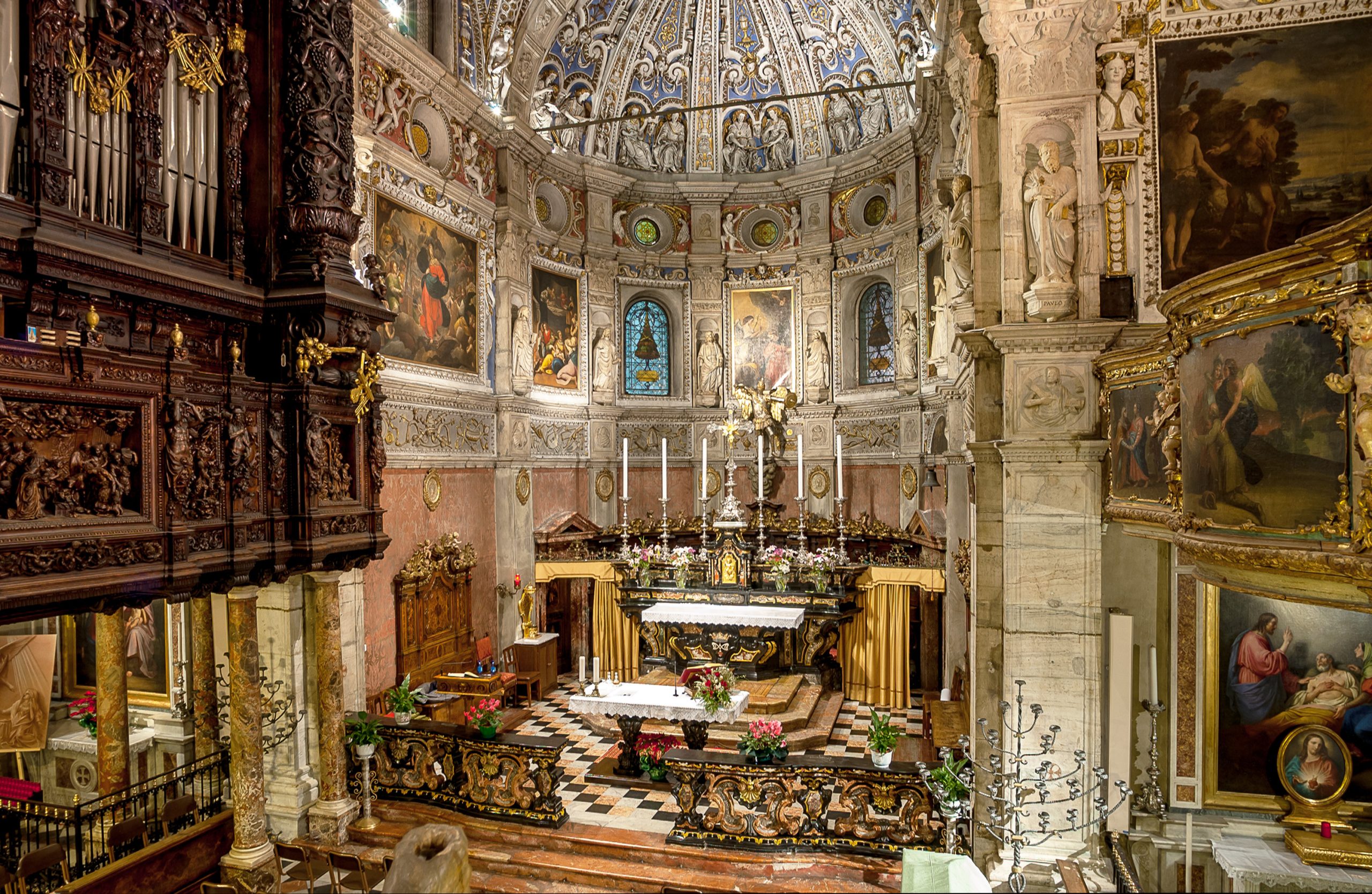
In the heart of the city stands the Basilica of the Madonna of Tirano, a center of devotion and spirituality, as well as a historical and artistic symbol of the area.
Built in the early 16th century following the Marian apparition, it impresses with the Renaissance balance of its exteriors and the Baroque richness of its interiors.
The pride of the Sanctuary is the monumental historic organ, one of the most majestic in Italy, and the Chapel of the Apparition, which preserves the piece of land where Mary’s feet touched.
Sanctuary of the Madonna of Tirano
In the heart of the city stands the Basilica of the Madonna of Tirano, a center of devotion and spirituality, as well as a historical and artistic symbol of the area. Built in the early 16th century following the Marian apparition, it impresses with the Renaissance balance of its exteriors and the Baroque richness of its interiors. The pride of the Sanctuary is the monumental historic organ, one of the most majestic in Italy, and the Chapel of the Apparition, which preserves the piece of land where Mary’s feet touched.
Sanctuary of the Madonna of Tirano
In the heart of the city stands the Basilica of the Madonna of Tirano, a center of devotion and spirituality, as well as a historical and artistic symbol of the area.
Built in the early 16th century following the Marian apparition, it impresses with the Renaissance balance of its exteriors and the Baroque richness of its interiors.
The pride of the Sanctuary is the monumental historic organ, one of the most majestic in Italy, and the Chapel of the Apparition, which preserves the piece of land where Mary’s feet touched.
Tirano, destination of the Marian Way of the Alps
The Sanctuary of the Madonna of Tirano serves as both the starting point and the ending point of the Marian Way of the Alps, a trekking route with significant religious, tourist, and cultural value that crosses the Valtellina.
The path, which touches Marian places of worship in the province of Sondrio, is divided into two routes: the Western Route, from Piantedo to Tirano (91 km), and the Eastern Route, from Bormio to Tirano (72 km).
In Tirano, the journey concludes: by presenting the credential, pilgrims receive the testimonium from the Rector of the Sanctuary, a tangible sign of a physical and spiritual experience.
Tirano, destination of the Marian Way of the Alps
The Sanctuary of the Madonna of Tirano serves as both the starting point and the ending point of the Marian Way of the Alps, a trekking route with significant religious, tourist, and cultural value that crosses the Valtellina.
The path, which touches Marian places of worship in the province of Sondrio, is divided into two routes: the Western Route, from Piantedo to Tirano (91 km), and the Eastern Route, from Bormio to Tirano (72 km).
In Tirano, the journey concludes: by presenting the credential, pilgrims receive the testimonium from the Rector of the Sanctuary, a tangible sign of a physical and spiritual experience.
Tirano, destination of the Marian Way of the Alps
The Sanctuary of the Madonna of Tirano serves as both the starting point and the ending point of the Marian Way of the Alps, a trekking route with significant religious, tourist, and cultural value that crosses the Valtellina.
The path, which touches Marian places of worship in the province of Sondrio, is divided into two routes: the Western Route, from Piantedo to Tirano (91 km), and the Eastern Route, from Bormio to Tirano (72 km).
In Tirano, the journey concludes: by presenting the credential, pilgrims receive the testimonium from the Rector of the Sanctuary, a tangible sign of a physical and spiritual experience.
Church of Santa Perpetua
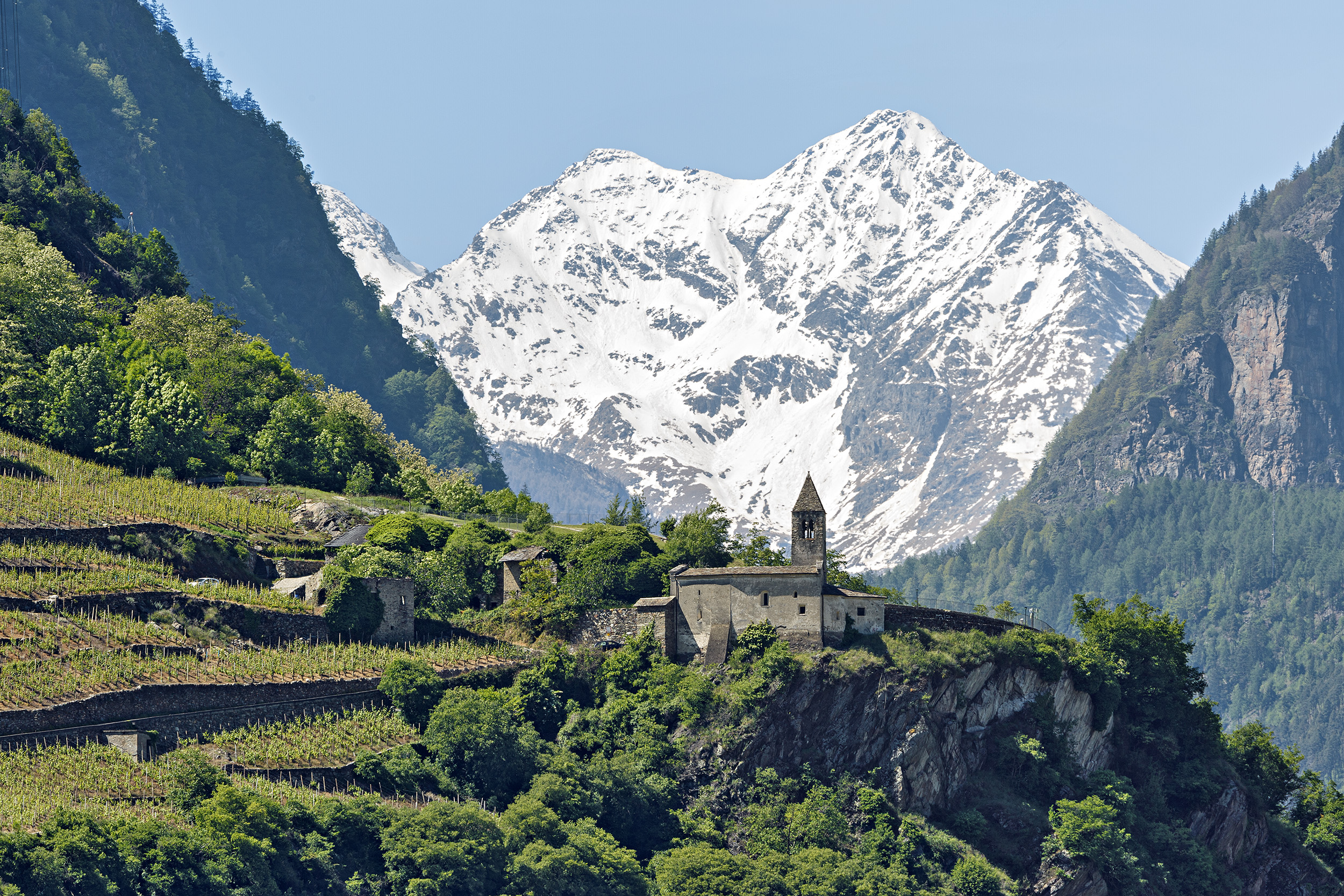
Suspended between sky and valley, the church of Santa Perpetua overlooks the entrance to the Poschiavo Valley from the ancient Bernina road.
A small Romanesque church naturally integrated into the Alpine environment, it houses apse paintings with Byzantine features and bears witness to centuries of history, from the missionaries of Gregory the Great to the medieval monastery.
Reaching the church is already part of the journey: a short path through nature and breathtaking views leads visitors to the door of the small church.
Church of Santa Perpetua
Suspended between sky and valley, the church of Santa Perpetua overlooks the entrance to the Poschiavo Valley from the ancient Bernina road.
A small Romanesque church naturally integrated into the Alpine environment, it houses apse paintings with Byzantine features and bears witness to centuries of history, from the missionaries of Gregory the Great to the medieval monastery.
Reaching the church is already part of the journey: a short path through nature and breathtaking views leads visitors to the door of the small church.
Church of Santa Perpetua
Suspended between sky and valley, the church of Santa Perpetua overlooks the entrance to the Poschiavo Valley from the ancient Bernina road.
A small Romanesque church naturally integrated into the Alpine environment, it houses apse paintings with Byzantine features and bears witness to centuries of history, from the missionaries of Gregory the Great to the medieval monastery.
Reaching the church is already part of the journey: a short path through nature and breathtaking views leads visitors to the door of the small church.
Church of San Romerio
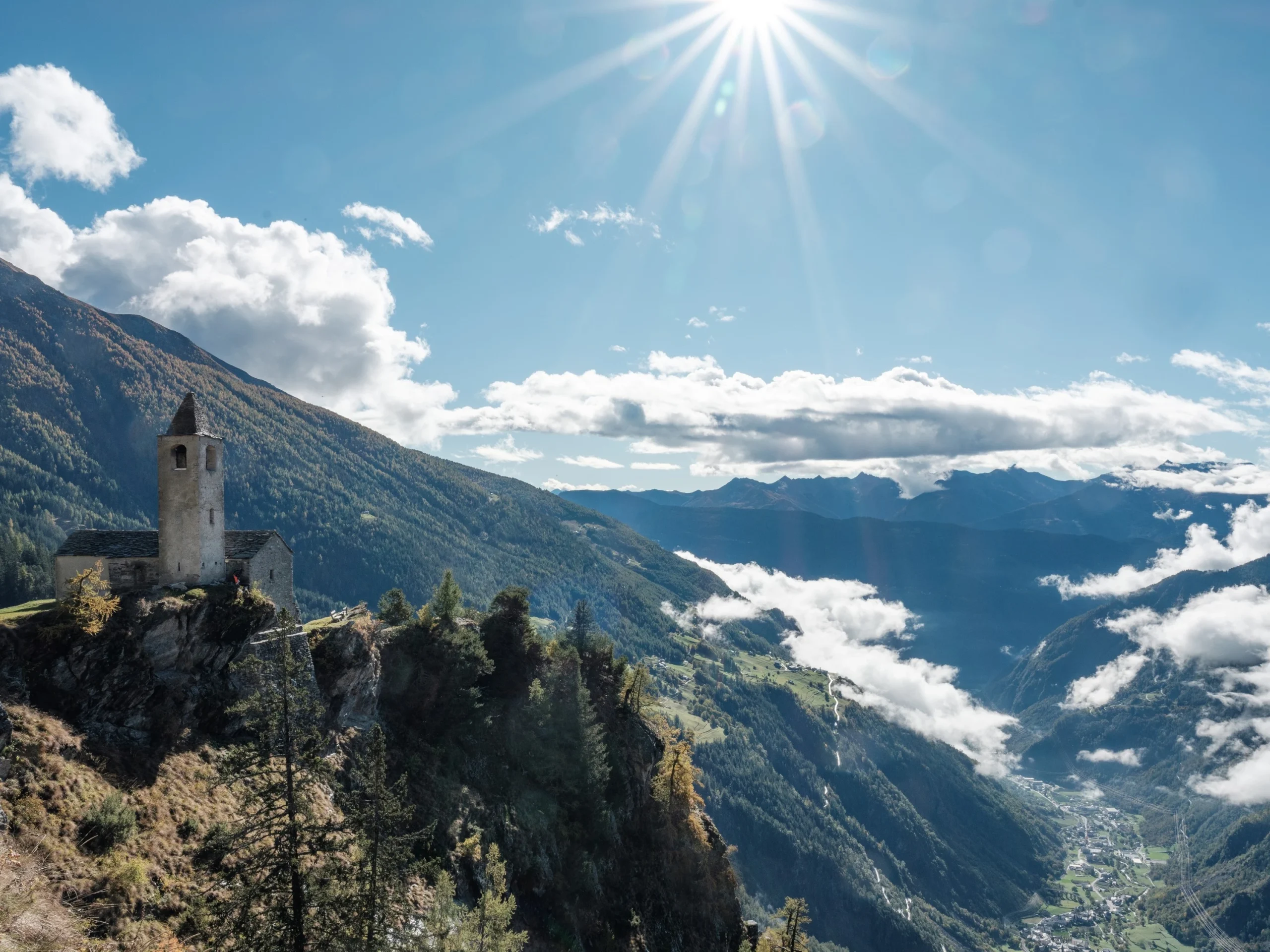
Perched on a plateau overlooking Lake Poschiavo, in the municipality of Brusio, Switzerland, at an altitude of 1,793 meters, the church of San Romerio is a small building made of local stone with a simple roof, historically a twin sanctuary to the church of Santa Perpetua in Tirano, with which it shared function and management.
Founded in the 11th century, tradition links the church to the figure of the hermit saint St. Remigius of Reims and to stories that still fuel the charm of the place today.
Here, it is easy to experience silence and spirituality.
Church of San Romerio
Perched on a plateau overlooking Lake Poschiavo, in the municipality of Brusio, Switzerland, at an altitude of 1,793 meters, the church of San Romerio is a small building made of local stone with a simple roof, historically a twin sanctuary to the church of Santa Perpetua in Tirano, with which it shared function and management.
Founded in the 11th century, tradition links the church to the figure of the hermit saint St. Remigius of Reims and to stories that still fuel the charm of the place today.
Here, it is easy to experience silence and spirituality.
Church of San Romerio
Perched on a plateau overlooking Lake Poschiavo, in the municipality of Brusio, Switzerland, at an altitude of 1,793 meters, the church of San Romerio is a small building made of local stone with a simple roof, historically a twin sanctuary to the church of Santa Perpetua in Tirano, with which it shared function and management.
Founded in the 11th century, tradition links the church to the figure of the hermit saint St. Remigius of Reims and to stories that still fuel the charm of the place today.
Here, it is easy to experience silence and spirituality.
Discover more must-see experiences in Tirano
This is just the beginning of what the city has to offer.
Discover more must-see experiences in Tirano
This is just the beginning of what the city has to offer.
Discover more must-see experiences in Tirano
This is just the beginning of what the city has to offer.