Palaces and Historic Center Itinerary
Palaces and Historic Center Itinerary
Palaces and Historic Center Itinerary
PRACTICAL INFO
- Length: About 2.3 km
- Travel time: XXX
- Difficulty: Easy
- Suitable for: History, architecture, and urban culture enthusiasts
Itinerary Palaces and Historic Center
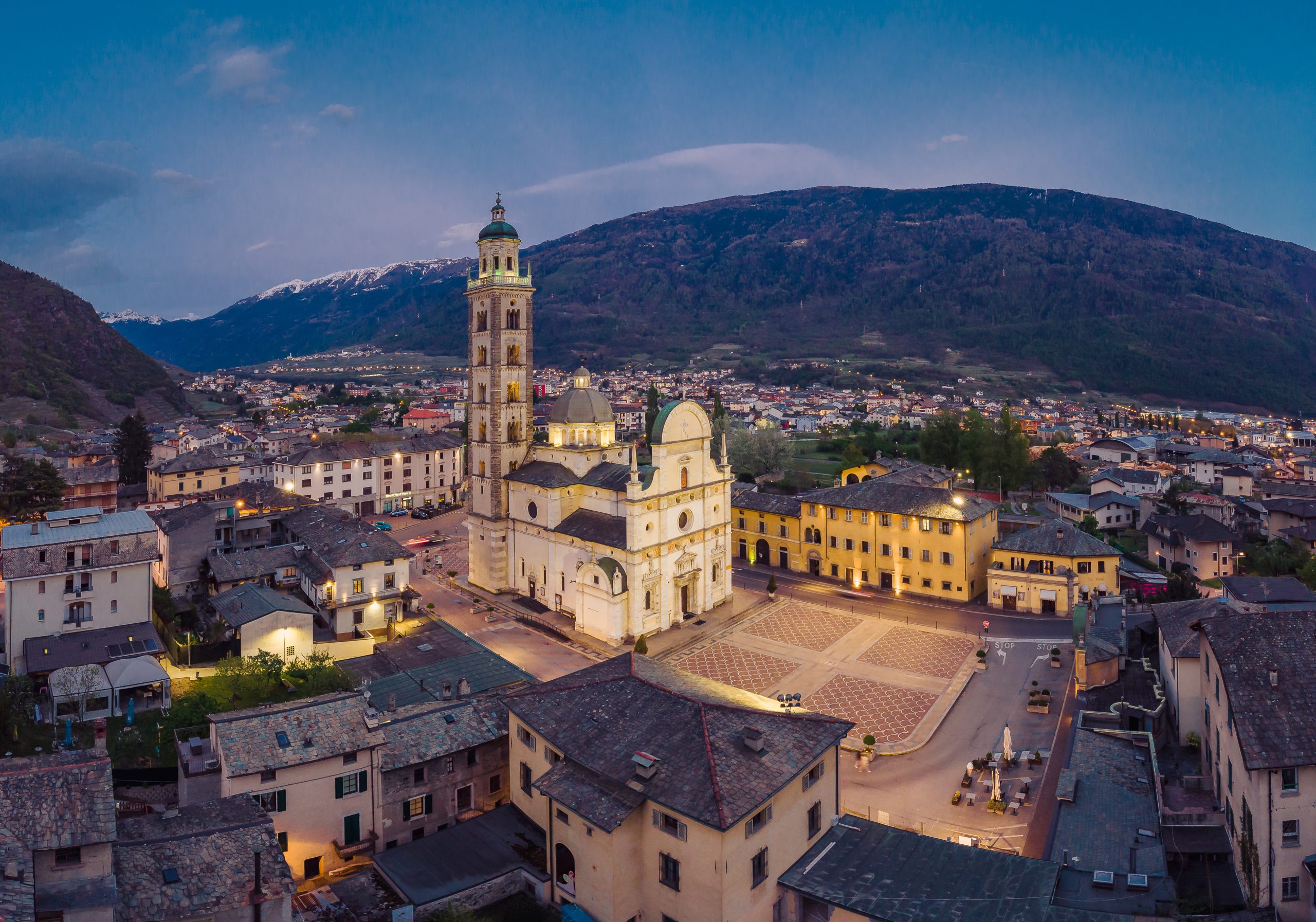
The Historic Center itinerary immerses the visitor in the oldest part of the city, once enclosed within the walls commissioned by Ludovico il Moro at the end of the 15th century. Noble palaces, city gates, courtyards, churches, and stately homes paint a picture of a city that, between the Renaissance and modern age, played a central role in the civil, political, and economic life of the valley.
The route, step by step
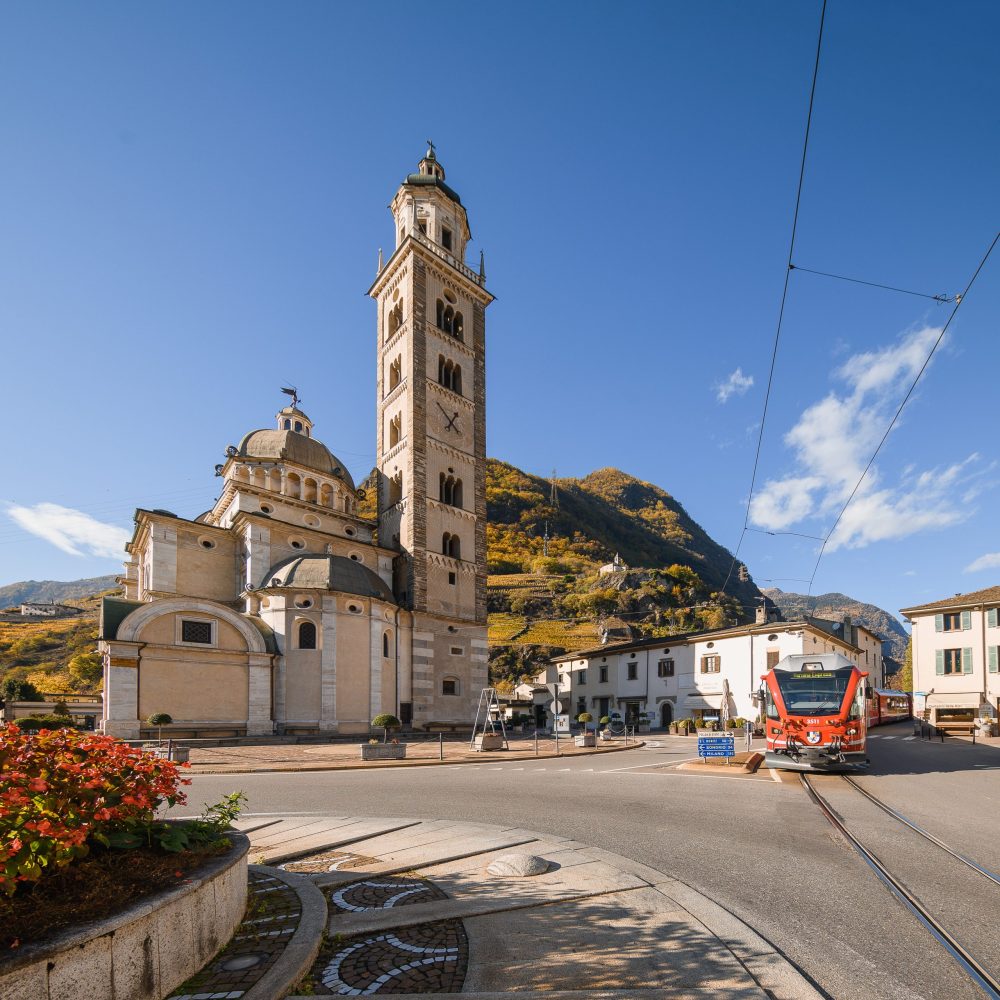
- Piazza delle Stazioni – Piazza Marinoni – Piazzetta Quadrio
You will encounter the 16th-century Palazzo Foppoli, now a civic venue for exhibitions and events. - Iron Bridge and Porta Poschiavina
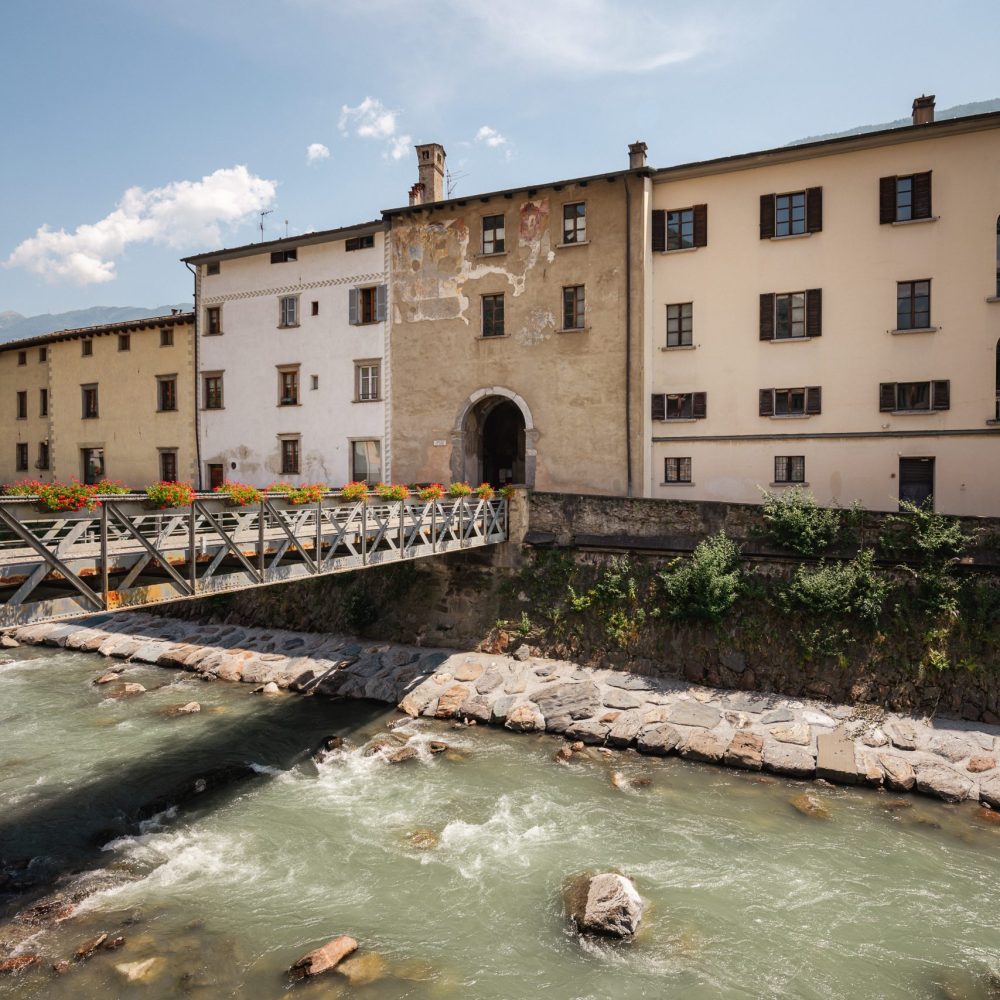
Enter the old town by passing through Porta Poschiavina, the best-preserved city gate, with 16th-century frescoes. Next to it is the Palazzo Pretorio, the ancient seat of the Grisons podestà. - Piazza Cavour
Dominated by the Palazzo Marinoni, now the Town Hall, formerly an Augustinian convent (15th–17th century). Noteworthy are the internal portico, courtyard, and 16th-century portal. - Via San Carlo – Via Albonico – Via Ligari
On Via Ligari, you’ll find Palazzo Venosta (now Mazza), with a courtyard, entrance portico, and the stüa on the main floor. A little further on is Palazzo Lazzaroni (now d’Oro Lambertenghi), a house-museum open by appointment. - Piazzetta Salis
Here stands Palazzo Salis, the most important noble residence in Tirano. Today it houses a museum dedicated to the Salis family and the city’s history. - Porta Bormina – Via Visconti Venosta
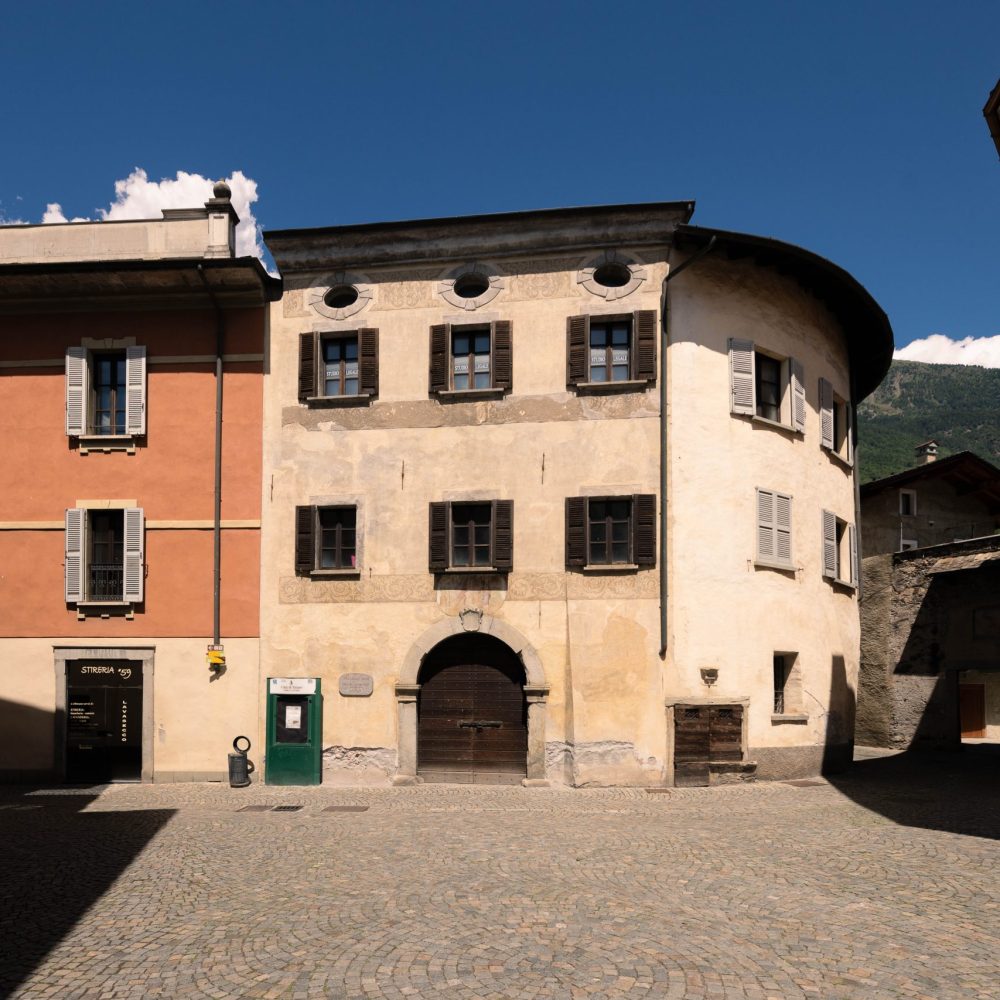
Through the alley of Porta Bormina, you reach Via Visconti Venosta, where you find some of the city’s most beautiful Renaissance palaces: Palazzo Venosta-Andres (now Giacomoni), with an elegant green stone facade; Palazzo Visconti Venosta, with a baroque portal and scenic staircase; Palazzo Buttafava, with a graffito-decorated atrium, staircase, and hanging garden; Palazzo Omodei (now Pradella-Noli), with a colonnaded courtyard and elevated passage; Palazzo Merizzi, the result of the union of two 16th-century buildings, with courtyards, porticoes, and family crests. - Via XX Settembre – Piazza San Martino – Via Torelli
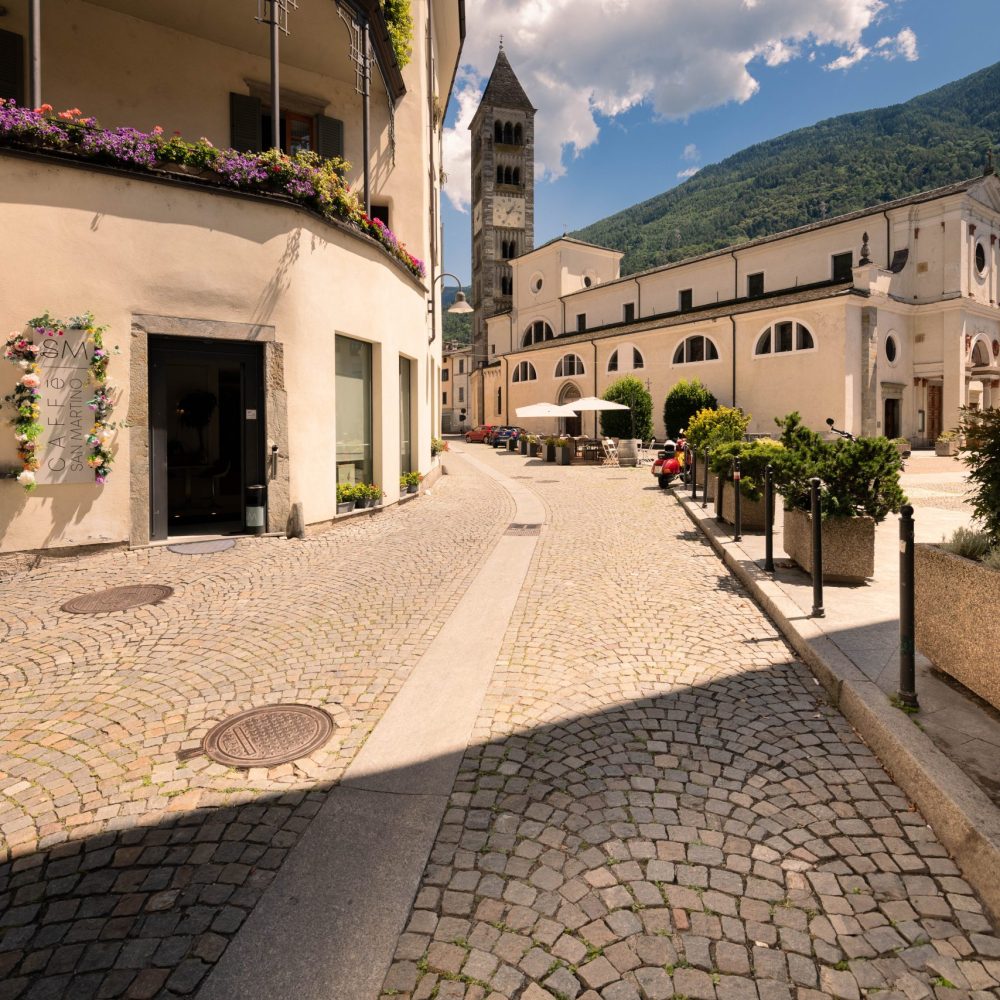
In front of the parish church is Palazzo Venosta (now Quadrio Curzio), remodeled in the 18th century. Along Via Torelli is Palazzo Torelli, with a baroque portal. The route ends with the Torre Torelli built in the second half of the 19th century.
Itinerary Palaces and Historic Center
The Historic Center itinerary immerses the visitor in the oldest part of the city, once enclosed within the walls commissioned by Ludovico il Moro at the end of the 15th century. Noble palaces, city gates, courtyards, churches, and stately homes paint a picture of a city that, between the Renaissance and modern age, played a central role in the civil, political, and economic life of the valley.
The route, step by step
- Piazza delle Stazioni – Piazza Marinoni – Piazzetta Quadrio
You will encounter the 16th-century Palazzo Foppoli, now a civic venue for exhibitions and events. - Iron Bridge and Porta Poschiavina
Enter the old town by passing through Porta Poschiavina, the best-preserved city gate, with 16th-century frescoes. Next to it is the Palazzo Pretorio, the ancient seat of the Grisons podestà. - Piazza Cavour
Dominated by the Palazzo Marinoni, now the Town Hall, formerly an Augustinian convent (15th–17th century). Noteworthy are the internal portico, courtyard, and 16th-century portal. - Via San Carlo – Via Albonico – Via Ligari
On Via Ligari, you’ll find Palazzo Venosta (now Mazza), with a courtyard, entrance portico, and the stüa on the main floor. A little further on is Palazzo Lazzaroni (now d’Oro Lambertenghi), a house-museum open by appointment. - Piazzetta Salis
Here stands Palazzo Salis, the most important noble residence in Tirano. Today it houses a museum dedicated to the Salis family and the city’s history. - Porta Bormina – Via Visconti Venosta
Through the alley of Porta Bormina, you reach Via Visconti Venosta, where you find some of the city’s most beautiful Renaissance palaces: Palazzo Venosta-Andres (now Giacomoni), with an elegant green stone facade; Palazzo Visconti Venosta, with a baroque portal and scenic staircase; Palazzo Buttafava, with a graffito-decorated atrium, staircase, and hanging garden; Palazzo Omodei (now Pradella-Noli), with a colonnaded courtyard and elevated passage; Palazzo Merizzi, the result of the union of two 16th-century buildings, with courtyards, porticoes, and family crests. - Via XX Settembre – Piazza San Martino – Via Torelli
In front of the parish church is Palazzo Venosta (now Quadrio Curzio), remodeled in the 18th century. Along Via Torelli is Palazzo Torelli, with a baroque portal. The route ends with the Torre Torelli built in the second half of the 19th century.
PRACTICAL INFO
- Length: About 2.3 km
- Travel time: XXX
- Difficulty: Easy
- Suitable for: History, architecture, and urban culture enthusiasts
Itinerary Palaces and Historic Center
The Historic Center itinerary immerses the visitor in the oldest part of the city, once enclosed within the walls commissioned by Ludovico il Moro at the end of the 15th century. Noble palaces, city gates, courtyards, churches, and stately homes paint a picture of a city that, between the Renaissance and modern age, played a central role in the civil, political, and economic life of the valley.
The route, step by step
- Piazza delle Stazioni – Piazza Marinoni – Piazzetta Quadrio
You will encounter the 16th-century Palazzo Foppoli, now a civic venue for exhibitions and events. - Iron Bridge and Porta Poschiavina
Enter the old town by passing through Porta Poschiavina, the best-preserved city gate, with 16th-century frescoes. Next to it is the Palazzo Pretorio, the ancient seat of the Grisons podestà. - Piazza Cavour
Dominated by the Palazzo Marinoni, now the Town Hall, formerly an Augustinian convent (15th–17th century). Noteworthy are the internal portico, courtyard, and 16th-century portal. - Via San Carlo – Via Albonico – Via Ligari
On Via Ligari, you’ll find Palazzo Venosta (now Mazza), with a courtyard, entrance portico, and the stüa on the main floor. A little further on is Palazzo Lazzaroni (now d’Oro Lambertenghi), a house-museum open by appointment. - Piazzetta Salis
Here stands Palazzo Salis, the most important noble residence in Tirano. Today it houses a museum dedicated to the Salis family and the city’s history. - Porta Bormina – Via Visconti Venosta
Through the alley of Porta Bormina, you reach Via Visconti Venosta, where you find some of the city’s most beautiful Renaissance palaces: Palazzo Venosta-Andres (now Giacomoni), with an elegant green stone facade; Palazzo Visconti Venosta, with a baroque portal and scenic staircase; Palazzo Buttafava, with a graffito-decorated atrium, staircase, and hanging garden; Palazzo Omodei (now Pradella-Noli), with a colonnaded courtyard and elevated passage; Palazzo Merizzi, the result of the union of two 16th-century buildings, with courtyards, porticoes, and family crests. - Via XX Settembre – Piazza San Martino – Via Torelli
In front of the parish church is Palazzo Venosta (now Quadrio Curzio), remodeled in the 18th century. Along Via Torelli is Palazzo Torelli, with a baroque portal. The route ends with the Torre Torelli built in the second half of the 19th century.
PRACTICAL INFO
- Length: About 2.3 km
- Travel time: XXX
- Difficulty: Easy
- Suitable for: History, architecture, and urban culture enthusiasts
Scopri la cultura e l'arte di Tirano percorrendo l'itinerario che fa per te
Scopri la cultura e l'arte di Tirano percorrendo l'itinerario che fa per te